

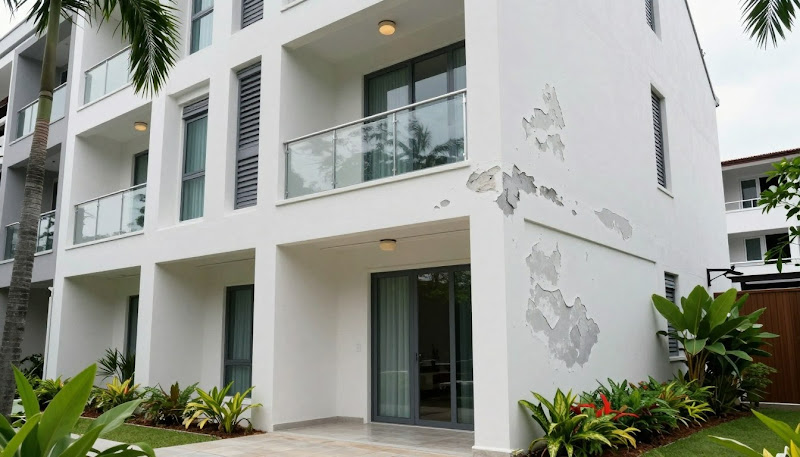
Spotting the signs you need exterior painting early helps Singapore homeowners avoid much larger repair bills later. Your home’s exterior paint is the first line of defence against high humidity, tropical rain, and intense sun; when that protection fails, moisture can penetrate walls, wood rot can develop, and minor faults may become structural issues. This guide outlines five clear warning signs so you can act promptly to protect your investment.
Key Takeaways
- Peeling paint on exterior walls exposes your property to moisture damage and mould growth
- Wall cracks and paint damage worsen quickly in Singapore’s tropical climate
- Fading paint shows UV degradation and reduced protection for your home
- Mould and mildew on exterior surfaces indicate trapped moisture behind failing paint
- Early intervention typically costs considerably less than delayed repairs — book an inspection if you spot more than one sign
- Professional exterior painters can assess severity, recommend the right paint system, and outline repair options
1. Peeling and Cracking Paint on Your Home Exterior
Peeling paint on exterior walls is the most obvious sign that your property needs attention. When paint separates from the wall surface, it creates direct channels for water and moisture to enter. Singapore’s high humidity and frequent rain accelerate this process, allowing small defects to expand quickly during wet cycles.
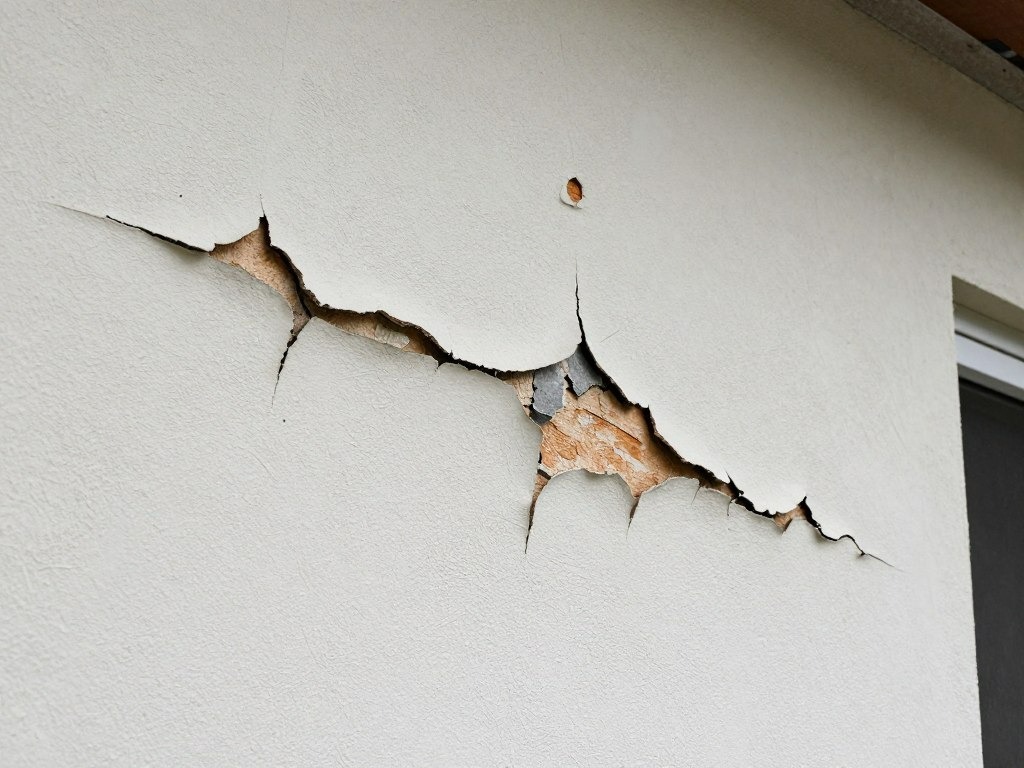
Professional exterior painters identify three common causes of peeling: inadequate surface preparation in earlier jobs, moisture trapped behind the paint film, and low-quality paint products that break down under intense UV exposure. Left unchecked, peeling leads to more extensive paint failure and substrate damage.
Why paint peels in Singapore’s climate
The combination of strong sun and sudden tropical rain creates repeated thermal and moisture cycles. Walls heat in the morning sun, then cool rapidly when storms arrive; that movement stresses paint bonds and reduces long-term adhesion.
Early-stage peeling
- Small bubbles or blisters beneath the paint surface
- Minor flaking at corners and edges
- Slight lifting near window frames or joints
- Usually repairable with spot treatment
Advanced-stage peeling
- Large sections are detaching from the walls
- Exposed substrate visible beneath paint
- Moisture staining appearing on interior walls
- Often requires full exterior house painting
Studies indicate that paint systems in tropical environments deteriorate faster than in temperate climates; product choice and correct surface preparation strongly influence lifespan. If peeling affects a large proportion of any wall—commonly accepted as more than 20%—plan for full resurfacing rather than piecemeal repairs.
Immediate actions for peeling exterior paint
Do not delay: small affected areas typically expand during rainy seasons. Steps to take now:
- Photograph affected walls to track progression
- Call a professional exterior painter for an assessment
- Repair underlying moisture sources before repainting
- Use appropriate primers and premium exterior paint for tropical climates
Quick tip: If peeling exceeds 20% of a wall, arrange a full repaint — spot repairs will likely be visible and brief in effect.
2. Fading and Discolouration of Exterior House Paint
Noticeable colour change or chalking shows that your exterior paint has lost much of its protective value. Singapore’s equatorial sun accelerates photodegradation: UV breaks down pigments and binders, causing the surface to become chalky and less water‑resistant.
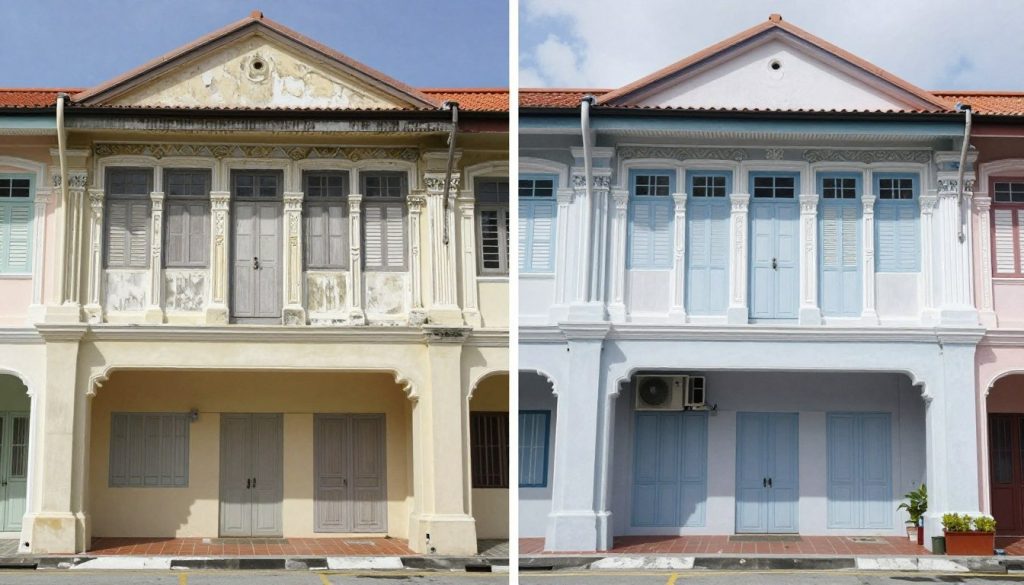
Dark colours often fade faster because they absorb more heat; south‑ or west‑facing walls typically show wear first. Premium exterior paint systems offer better UV resistance and longer lifespans, reducing recoat frequency and lifecycle cost.
Understanding paint degradation
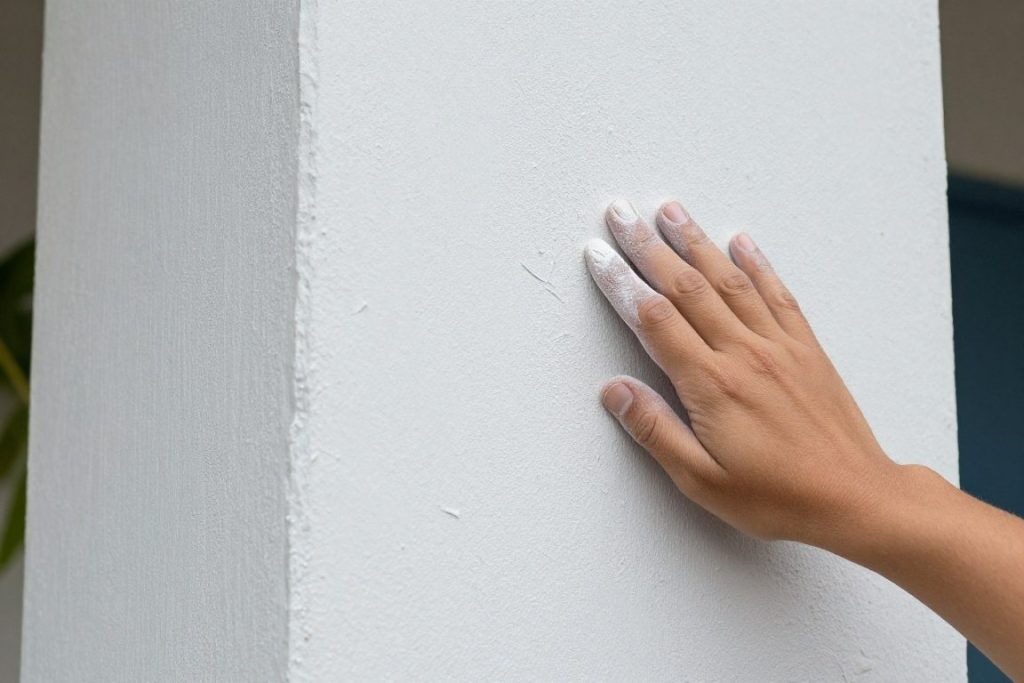
UV radiation breaks molecular bonds in the paint film (photodegradation), leading to chalking, loss of adhesion, and faster moisture ingress. When you rub a faded wall and white powder transfers to your hand, the coating no longer provides effective moisture protection.
| Paint Quality | Expected Lifespan (Singapore) | Fading Timeline | Cost Impact |
| Premium exterior | 7–10 years | Noticeable after ~5 years | 15% higher initial cost |
| Mid-range | 5–7 years | Visible after ~3 years | Standard pricing |
| Economy grade | 3–5 years | Rapid within 2 years | Lower initial cost, higher lifetime spend |
The Building and Construction Authority recommends routine exterior maintenance inspections; visible fading usually means the paint layer has lost a substantial share of its protective capability and should be evaluated for recoating.
When fading needs action
- Chalking transfers to the skin when rubbed
- Colour differences between sheltered and exposed areas exceed two shades
- Paint feels rough or powdery to the touch
- Previous repainting was more than five years ago, or signs of cracking/peeling are present
3. Mould and Mildew on Exterior Walls
Mould and mildew on exterior surfaces are clear indicators of trapped moisture behind the paint. Singapore’s humid environment promotes fungal growth when the paint film no longer repels water. Dark streaks, green patches, or black spots are signs of active growth that need prompt remediation.
Surface mould not only spoils appearance but also consumes organic components in paint films and underlying substrates. If left untreated, mould can penetrate deeper into wall materials and require more extensive repair than a simple repaint.
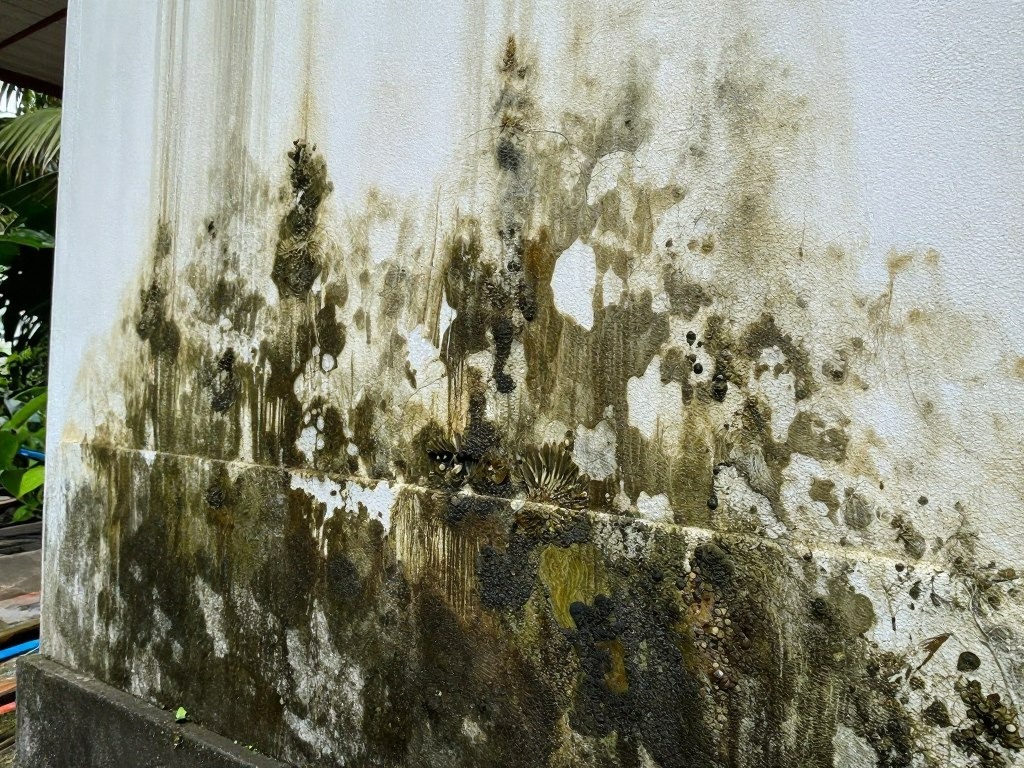
Health and structural concerns
Mould on exterior walls can affect indoor air quality as spores travel through cracks into living spaces. The National Environment Agency highlights that dampness and mould contribute to respiratory irritation in humid climates.
Prevention benefits
- Quality exterior paint reduces moisture absorption
- Correct surface preparation removes mould food sources
- Regular maintenance detects growth early
- Anti‑fungal additives in paint resist recolonisation
Neglect consequences
- Mould spreads to interior finishes
- Wood rot develops in structural elements
- Occupant health risks increase
- Property value is likely to decline
Treating mould before exterior painting
Do not paint over active mould. Professional exterior painters follow a defined remediation sequence: remove visible growth, locate and repair the moisture source, allow surfaces to dry fully, apply an anti‑fungal primer, and then use paint formulated with mildew inhibitors.
- Remove mould with appropriate cleaning agents and rinse thoroughly
- Identify and fix leaks, poor drainage, or ventilation issues causing moisture
- Allow the substrate to dry completely (several days in dry weather)
- Apply anti‑fungal primer before any topcoat
- Use a quality paint system suited to tropical climates with mildew resistance
4. Wood Rot and Surface Damage on Siding
Wood rot is one of the most serious outcomes of failed exterior paint. When moisture reaches unprotected timber, decay can begin quickly in Singapore’s humid climate. What starts as soft spots at trims or window frames may progress to structural compromise and costly siding replacement.
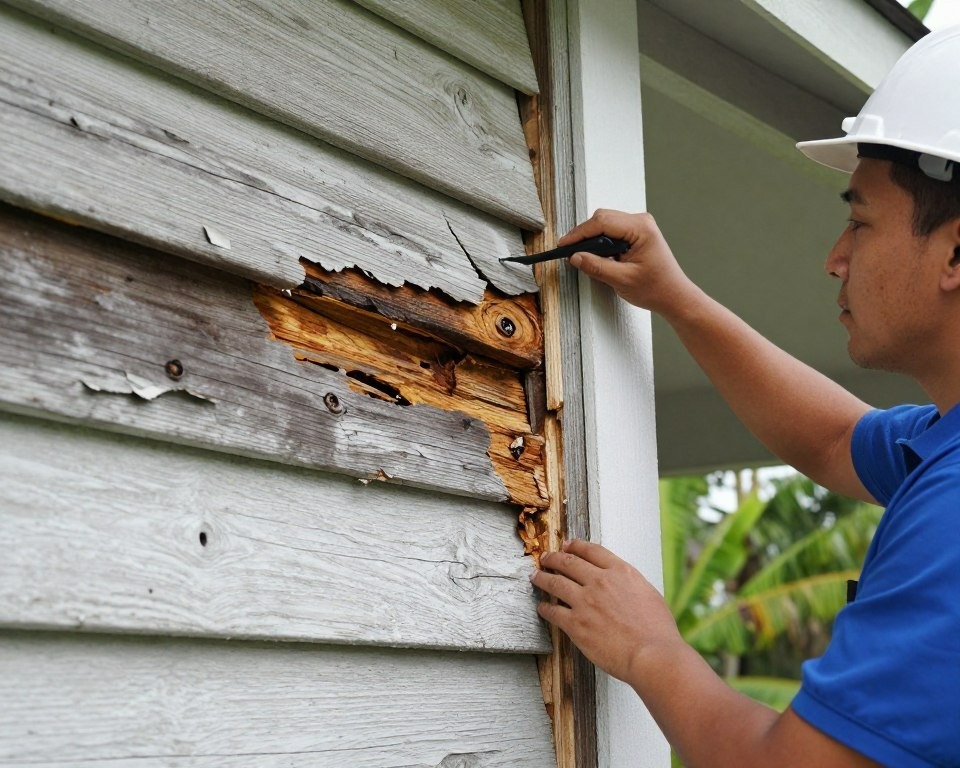
Check window frames, door trim, and siding corners where water collects. A simple screwdriver test—pressing to see if the tool sinks in—quickly reveals soft rot that needs repair before repainting.
Progression of wood deterioration
Rot develops in stages: early, treatable decay; advancing rot that requires localised replacement; and widespread failure needing structural work. Early detection keeps repair costs manageable.
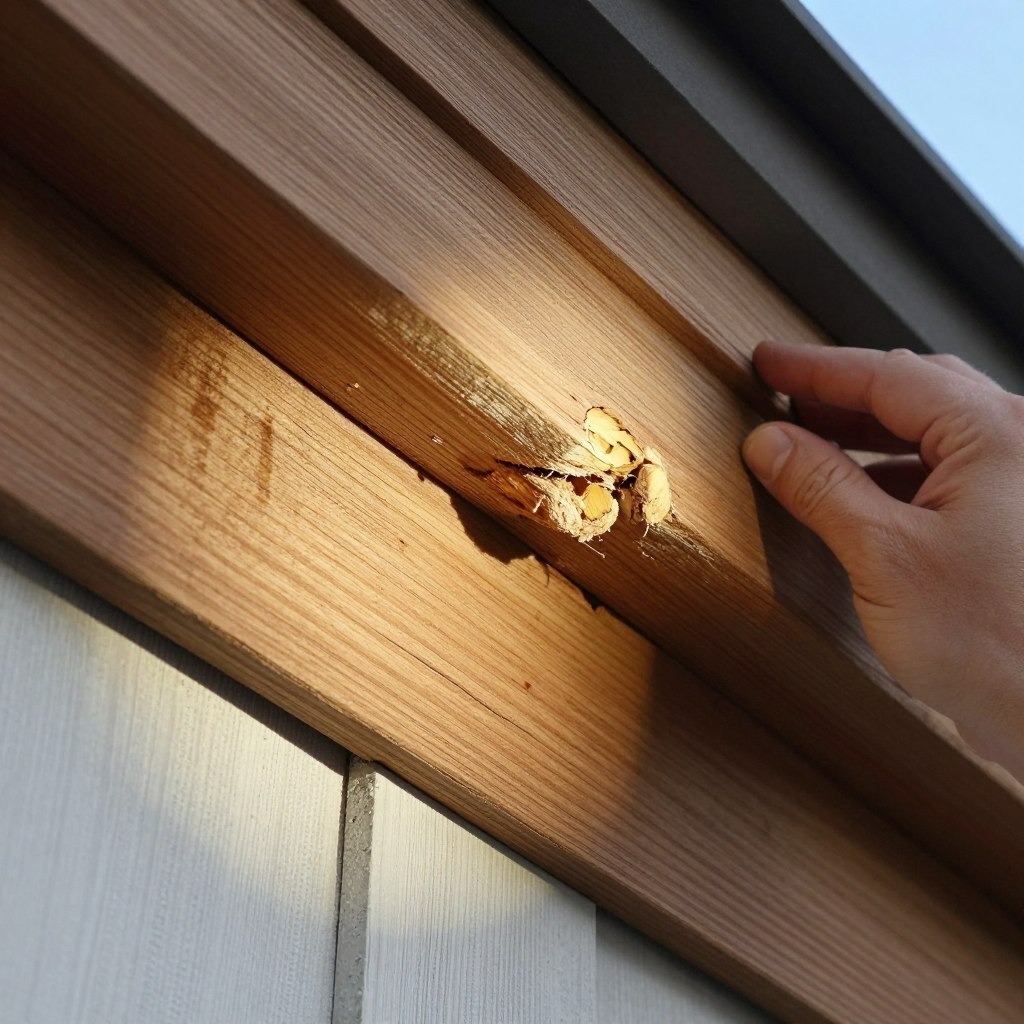
Early-stage indicators
Timber feels soft when pressed but remains load-bearing; paint around the area bubbles or peels, and dark staining appears. At this point, professionals can remove affected timber, treat surrounding areas, and reinstate finishes.
Prevention through regular maintenance
Good exterior paint is the primary protection for timber; it should block moisture while allowing the wood to breathe. Annual inspections before the wet season, prompt repair of any paint damage, correct drainage, and trimming vegetation away from walls all reduce rot risk.
- Inspect wood surfaces annually and before heavy rains
- Fix paint damage immediately to prevent water entry
- Ensure drainage directs water away from siding and trim
- Keep plants and soil clear of timber to improve air circulation
- Apply a fresh coat of paint before protection fails completely
Critical warning: Multiple rot locations usually indicate broader moisture issues (poor drainage, roof leaks). Have a professional exterior painter or building specialist investigate before repainting.
5. Cracks and Gaps in Exterior Paint and Walls
Wall cracks and paint damage allow moisture direct access to substrates. Even hairline cracks can widen under Singapore’s daily thermal cycles as walls heat and cool, so early repair is essential to prevent deeper material deterioration.
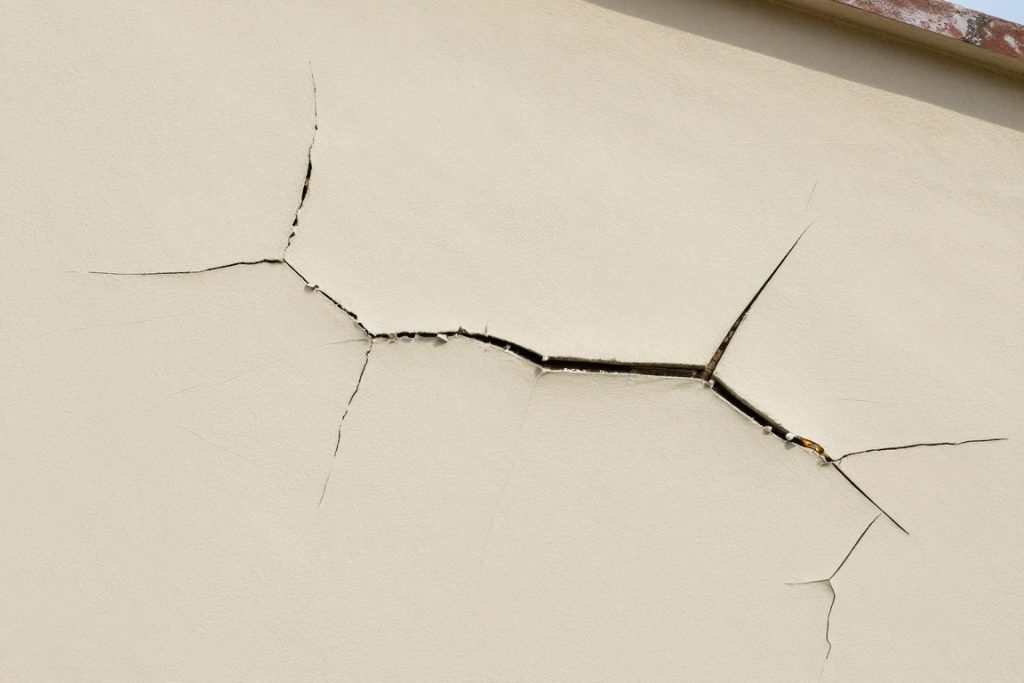
There are two main crack types: surface crazing that affects the paint layer only, and structural cracks that penetrate wall materials. Address the latter immediately with a professional assessment before any painting work.
Identifying crack severity
| Crack Type | Width | Depth | Action Required |
| Surface crazing | Less than 1mm | Paint layer only | Fill and repaint during next cycle |
| Paint cracking | 1–3mm | Through paint to substrate | Immediate repainting and filler |
| Structural cracks | Over 3mm | Into wall materials | Professional structural assessment first |
Why gaps form and how to prevent them
Gaps develop where paint separates from siding, trim or frames—often due to poor preparation, incompatible materials or low‑flexibility paint systems. Proper cleaning, flexible fillers and a suitable multi‑coat system designed for tropical climates prevent recurrence.
Proper crack repair process
- Remove loose paint and debris from cracks
- Apply a flexible elastomeric filler
- Sand smooth when cured and prime the area
- Finish with quality exterior paint applied in recommended coats
Prevention strategies
- Choose paint systems specified for tropical exposure
- Follow manufacturer guidance on surface preparation
- Apply the recommended number of paint layers
- Eliminate moisture sources before repainting
- Schedule regular inspections to catch damage early
Evidence from building research shows that correctly filled and sealed cracks reduce moisture intrusion significantly and extend the working life of exterior paint systems. Regular maintenance and correct material selection are the best defences against recurring damage.
Cost Reality: Early Painting vs. Delayed Repairs
Understanding the financial impact of painting timelines helps homeowners make better decisions. Many delay exterior house painting to avoid an immediate bill, but deferring maintenance often leads to significantly higher costs when moisture or structural damage develops.
Actual cost breakdown (typical ranges)
| Project Scope | Early Action Cost | Delayed Action Cost | Additional Damage |
| Standard exterior painting (typical landed property) | $3,000 – $5,000 | $8,000 – $12,000 | Wood rot repairs, siding replacement |
| Paint touch-up + minor repair | $1,500 – $2,500 | $5,000 – $8,000 | Mould remediation, wall repairs |
| Preventive maintenance | $800 – $1,500 | $4,000 – $7,000 | Moisture damage, extensive surface preparation |
Hidden costs of delaying exterior work
Beyond the headline repair costs, postponed maintenance can create secondary expenses and lost value. Examples include reduced sale price, higher energy bills, and costly remediation of deeper defects.
- Visible exterior paint deterioration can reduce perceived property value (estimates vary by market)
- Moisture-compromised insulation may increase energy costs
- Replacing rotten timber is often several times more expensive than preventive painting
- Mould remediation can add thousands to a repainting project
- Interior repairs from long-term moisture intrusion increase the total project scope
Return on investment for timely painting
Well-maintained exterior paint improves kerb appeal and can speed up sales. Quality exterior house painting typically returns a portion of the cost in resale value and reduces negotiation friction. Ask your contractor for local market examples when requesting a quote.
“In our analysis of local sales, properties with recent exterior painting presented better to buyers and required fewer price concessions.” — Property Market Research
Singapore climate and product choice
Tropical weather accelerates exterior paint deterioration: UV radiation, high humidity, and heavy rain shorten product life compared with temperate climates. Paint systems that last a decade elsewhere may need repainting sooner in Singapore.
Professional exterior painters select systems formulated for tropical exposure. These premium options typically cost 20–30% more up front but reduce the frequency of repainting and lower lifetime costs when compared with cheaper alternatives.
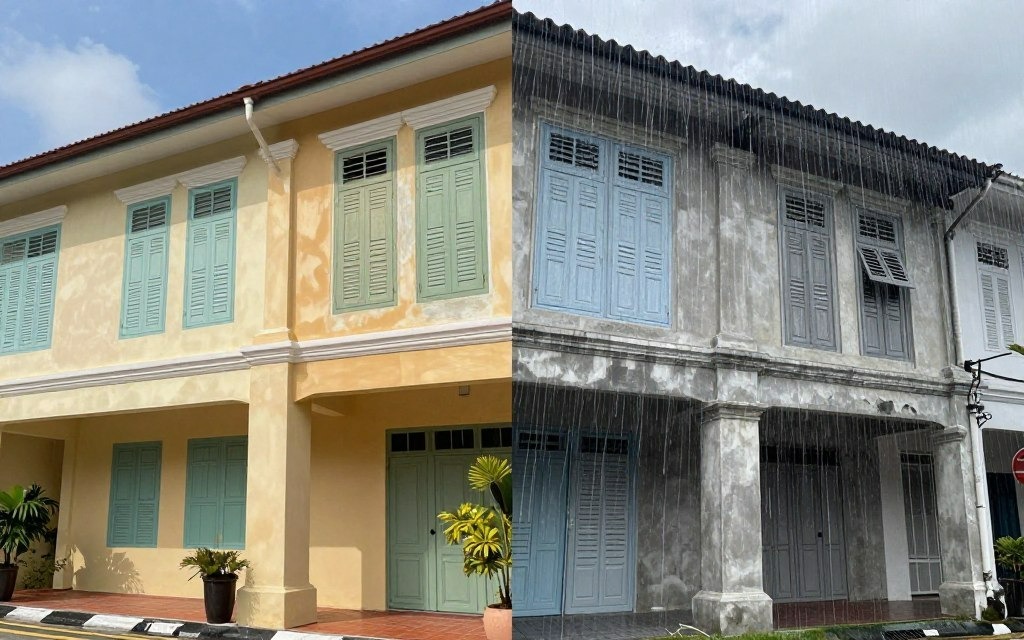
When to Repaint House Exterior: Professional Guidelines
Knowing when to repaint prevents both premature spending and costly delays. Several factors beyond visible damage indicate optimal repaint timeframes; professional exterior painters assess these when advising maintenance schedules.
Age-based repainting timeline
Paint age offers a starting point even without obvious defects; in Singapore, adjust timelines downward compared with temperate regions. Typical maximum intervals:
- Premium paint systems
- 7–10 year maximum lifespan
- High UV resistance
- Superior moisture protection
- Warranty is commonly 5–7 years
- Best for sun-exposed walls
- Standard quality paint
- 5–7 years expected durability
- Suitable for many tropical locations
- Regular maintenance advised
- Warranty is commonly 3–5 years
- Good for sheltered areas
- Economy-grade paint
- 3–5 year maximum lifespan
- Limited weather resistance
- Frequent repainting required
- Minimal warranty
- Higher lifetime expense
Exposure and environmental factors
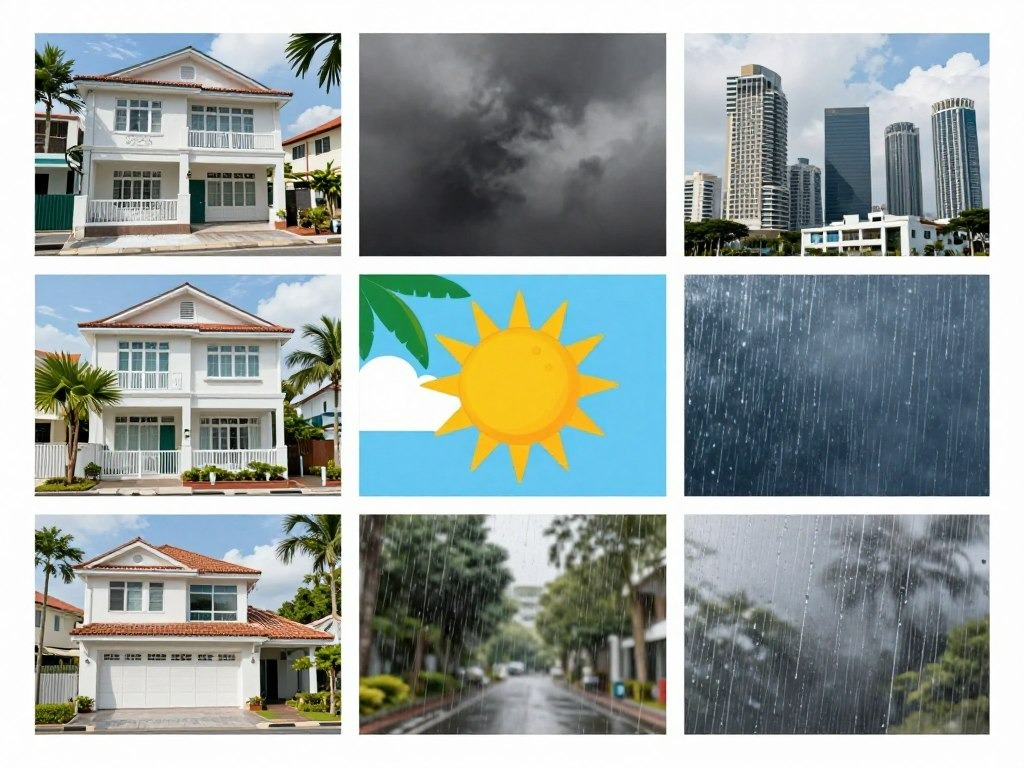
Repaint timing varies with location and orientation. Coastal exposure, heavy sun, pollution, or high vegetation each shorten paint life and increase inspection frequency.
| Location Factor | Paint Life Impact | Recommended Inspection Frequency |
| Coastal areas (within 5 km) | Reduce lifespan by ~30–40% | Every 2 years |
| Direct sun exposure (south/west walls) | Reduce lifespan by ~20–30% | Annual inspection |
| Sheltered / north-facing areas | Standard lifespan | Every 3 years |
| High vegetation proximity | Increase mould risk | Annual mould inspection |
Quality indicators beyond age
Regular inspections uncover problems before total failure. Practical steps:
- Inspect exterior surfaces in dry weather
- Photograph suspect areas to track change over time
- Test adhesion with masking tape or a small scrape
- Use infrared moisture scanning when available to detect hidden damp
- Keep a repair history to plan maintenance cycles
- Consult professional exterior painters for a full evaluation
- Compare the current condition with previous photos when planning a repaint
Planned repainting based on condition assessment reduces lifecycle costs compared with emergency repairs; ask for documented inspection findings when you request quotes.
Selecting Professional Exterior Painters in Singapore
Quality workmanship determines how long your exterior painting will last. Even the best paint fails if applied incorrectly. Professional exterior painters bring the experience in surface preparation, product selection, and application techniques needed for Singapore’s tropical conditions.
Essential credentials
- BCA registration for commercial projects (if applicable)
- Valid business insurance and worker coverage
- Portfolio of recent exterior house projects in Singapore
- Familiarity with tropical paint systems and warranties
- Local references you can contact
Red flags to avoid
- Quotes significantly below market rates without clear scope
- Pressure to pay the full amount up front
- Unwillingness to provide a written warranty or contract
- No verifiable business address or local references
- Inability to explain surface preparation and moisture control steps
Questions to ask potential painters (and what to expect)
Vetting contractors prevents poor outcomes. Ask clear questions and expect specific answers—quality painters will explain their methods.
- What surface preparation steps are included? (Expect: cleaning, mould removal, repairs, primer)
- Which paint brands and products do you recommend for Singapore’s climate? (Expect named tropical-grade systems)
- How will you address existing mould, rot, or moisture issues? (Expect: remediation, drying time, anti‑fungal primer)
- What warranty do you provide on workmanship and materials? (Get terms in writing)
- Can you provide recent client references for similar projects?
- How will you protect landscaping and adjacent surfaces during work?
- What is the estimated timeframe and payment schedule?
Understanding quotations and pricing
Comprehensive quotes list each work component so you can compare offers fairly. A trustworthy quote shows surface preparation tasks, paint brand and grade, number of coats, labour, repairs, warranty, and exclusions.
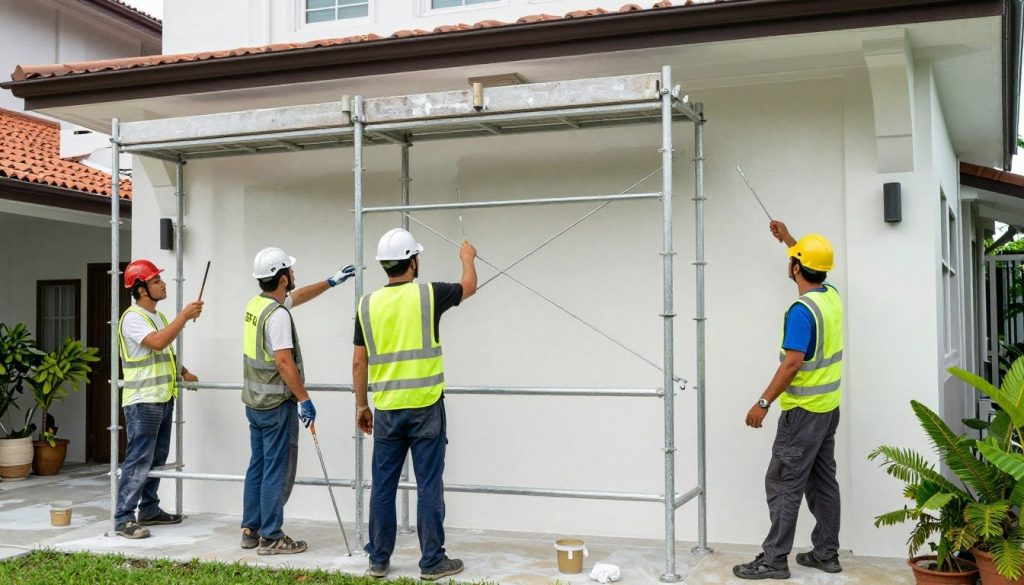
Quote should include (sample line items): surface cleaning and mould treatment, repair and replacement (timber/siding), primer and topcoat brand/colour, number of coats, scaffolding and protection, warranty terms, project timeline, payment schedule, and any exclusions.
Frequently Asked Questions About Exterior Painting
How often should I repaint my house exterior in Singapore?
Typical repaint intervals are 5–7 years with quality paint; coastal or sun‑exposed walls may need repainting every 3–5 years. Annual inspections help catch issues early. Professional exterior painters will tailor recommendations to your home’s orientation and exposure.
What causes paint to peel on exterior walls in Singapore?
Peeling usually results from moisture intrusion, poor surface preparation or unsuitable paint for tropical exposure. High humidity and thermal movement stress adhesion. Proper cleaning, priming, and using tropical-grade paint prevent most peeling problems.
Can I paint over mould on exterior walls?
Do not paint over active mould. Professional exterior painters remove mould, fix the moisture source, allow the surface to dry, apply an anti‑fungal primer and then topcoat with a mildew‑resistant paint system.
Protect Your Property with Timely Exterior Painting
Recognising the signs you need exterior painting protects your investment and helps avoid expensive repairs. Peeling exterior paint, fading colours, mould and mildew growth, wood rot, and wall cracks all signal the need for prompt attention. Singapore’s tropical climate accelerates deterioration, so regular maintenance is essential.
Quality exterior house painting provides critical protection against moisture intrusion and structural damage. Professional exterior painters offer expertise in surface preparation, product selection, and application techniques that deliver longer‑lasting results. Don’t wait until minor paint issues become major structural problems requiring costly restoration.
Acting early saves money and preserves property value and kerb appeal. A simple three‑step approach helps homeowners respond quickly: inspect your exterior, photograph and document any defects, then contact a professional for a free assessment and itemised quote. Regular inspections and timely repainting extend paint life and reduce the lifetime cost of maintenance.
Explore our services:
- Commercial Painting
- Exterior Painting
- Interior Painting
- Maintenance Painting
- Specialized Finishes
- Wall Plastering
- Contact Us now!
- Phone Number: +65 9247 1009
- Email Address: athenateamcleaning@gmail.com
- Address: 2 Venture Drive, #14-02, Vision Exchange, Singapore 608526