

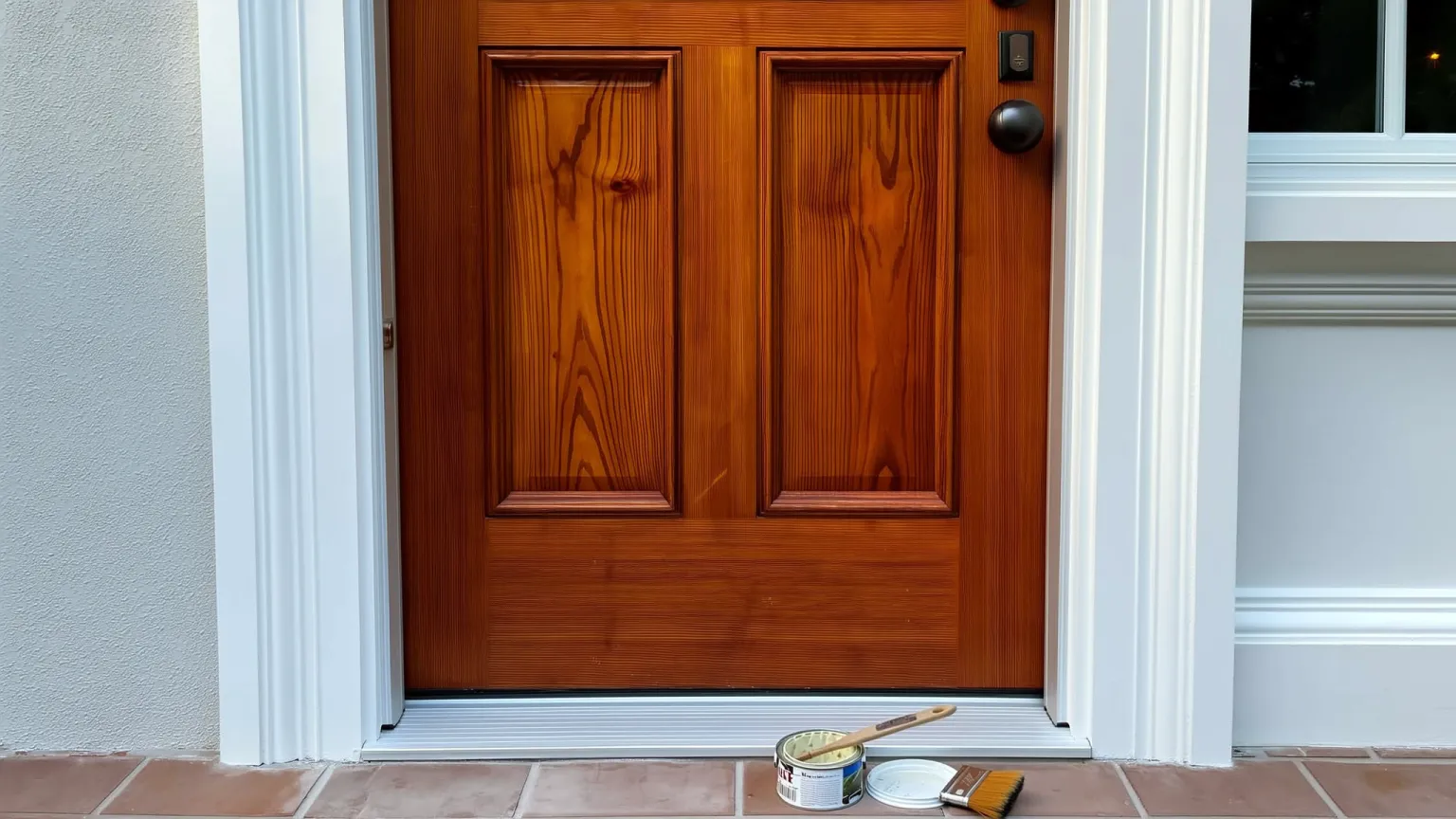
Varnish keeps the wood grain on show. Paint covers it with a solid colour. The wood itself usually makes the choice for you: good timber with a grain worth seeing suits varnish, and old, patched or stained wood suits paint.
Here's how we'd decide for the wood in a Singapore home, inside and out, and what to ask for so the finish lasts in our heat and rain.
The short version
| Pick | When the wood is | Good for |
| Varnish or wood stain | Solid timber in good shape, with a grain you like | Main doors, timber panels, furniture, railings, decks |
| Paint (enamel or acrylic) | Patched, stained, mismatched or plain board | Doors and frames, skirting, trims, cabinets, fascias, fences |
If you can't decide, look at the wood in daylight. If you'd be happy to see every knot and water mark under a clear coat, varnish it. If you'd rather not, paint it.
What varnish does
Varnish is a clear or tinted coat that protects the wood and lets the grain show through. Nippon Paint describes its Timberlac as an interior decorative wood varnish for new and old wooden furniture and doors that enhances the natural grain. It comes clear or tinted, in a high gloss finish, and Nippon lists excellent resistance to scratches.
For wood outside, a water-based wood stain is the usual pick. Nippon says its Aqua WoodStain protects timber from harmful UV rays, shows off the grain, and has the durability and flexibility to suit decks and outdoor furniture.
The catch with any clear finish: it hides nothing. Old water marks, dark patches, filler and mismatched boards all show through, sometimes more than before.
What paint does
Paint gives you a solid colour and a uniform surface. On wood, that usually means an enamel. Nippon describes Bodelac 9000 as a durable enamel that protects wood from harsh weather, in high gloss, semi gloss or matt, for primed wood and metal surfaces such as doors, railings and furniture.
If paint smell worries you, water-based options exist. Nippon's Aqua Bodelac is a water-based gloss enamel with low VOC and extremely low odour, made for doors, architraves, windows, timber trims and skirting boards.
For wood outdoors, Nippon's TimberCoat is a low-sheen, water-based acrylic for outdoor furniture, fences, fascias and exposed balconies, with a mould control additive. Nippon says it isn't recommended for areas with heavy foot traffic, so it's not the one for a deck you walk on every day.
Inside the house: room by room
| Wood | Our usual pick | Why |
| Solid timber main door | Varnish | The grain is the point of a good door |
| Room doors and frames | Paint | Usually board or veneer, and they take knocks |
| Skirting and trims | Paint | Matches the wall, easy to touch up |
| Kitchen and wardrobe doors | Paint, or leave the laminate | Painting laminate needs the right primer first |
| Timber feature wall or panels | Varnish | Grain and warmth are why you chose timber |
| Furniture | Either | Depends on the piece and the look you want |
Laminate and other shiny surfaces don't take paint on their own. If you're painting over them, ask what primer goes on first. Our guide to primer before painting explains why.
Outside: sun, rain and mould
Outdoor wood in Singapore gets full sun, heavy rain and damp in between. That's harder on a clear finish than on paint, because the sun reaches the wood through a clear coat.
- **Decks and outdoor furniture:** a wood stain made for outdoor use. Expect to recoat more often than a painted surface.
- **Fences, fascias and pergolas:** paint is the easier choice to keep looking even, especially on older timber.
- **Gates and railings that mix wood and metal:** an enamel that suits both, on a primed surface.
Look for a product that says it resists mould or fungus. Most of the Nippon wood products above list mould or fungus resistance, and in our climate it's worth checking for on any outdoor coating. If a landed exterior is on the list, our landed house painting page covers the rest of the job. For walls and trims inside, see interior painting, and for the rest of the outside of the house, exterior painting.
Preparation decides how long it lasts
Whichever finish you pick, the coat on top is only as good as what's under it.
- Sand the old finish back and clean off the dust.
- Fill cracks and holes, then sand the filler flush.
- Prime bare wood before enamel. Nippon's guidance for Bodelac 9000 Undercoat is to prime bare wood first and apply the undercoat to appropriately primed wood.
- Let each coat dry as the label says before the next one.
- Keep the wood dry while you work. Moisture under a fresh coat is how blistering starts.
Rushed sanding and dust in the wet coat are the usual reasons a varnish looks cloudy or a paint job peels early.
Changing your mind later
You can paint over varnish once it's sanded and primed. Going the other way is much harder: getting paint off wood to show the grain again means stripping it back, and the wood underneath may have filler or stains you didn't know about.
So if you're unsure about a good solid timber door, varnish it first. You can always paint it later.
Touch-ups and records
A painted door is easy to touch up if you know exactly which paint and colour went on it. A varnished surface is harder, because a patch shows as a different sheen unless a wider area is sanded and recoated.
We record the paint brand, product, colour code and batch for every address we paint, wood included. Whoever does the job, ask for that list and keep it.
Sources
- Nippon Paint, Timberlac, read 10 Nov 2026
- Nippon Paint, Aqua WoodStain, read 10 Nov 2026
- Nippon Paint, Bodelac 9000, read 10 Nov 2026
- Nippon Paint, Aqua Bodelac, read 10 Nov 2026
- Nippon Paint, TimberCoat, read 10 Nov 2026
- Nippon Paint, Bodelac 9000 Undercoat, read 4 Nov 2026