


Selecting trusted home painting services in Singapore requires understanding what contractors intentionally leave unsaid. Beyond surface-level quotations, critical factors determine whether your investment delivers lasting results or costly disappointment. Singapore homeowners encounter issues with reliability, workmanship standards, and unexpected charges because crucial conversations never occur before signing agreements.
The difference between satisfactory outcomes and problematic projects lies in knowledge gaps that contractors exploit. This guide reveals contractor practices, material selections, timeline realities, and cost structures that transform your understanding of professional painting services. Armed with insider knowledge, you’ll navigate contractor selection confidently, recognising genuine expertise versus persuasive marketing tactics.
Key Takeaways
- Contractor licensing verification prevents engaging unqualified operators lacking proper credentials
- Material brand specifications reveal quality differences that contractors obscure through vague descriptions
- Detailed scope documentation eliminates ambiguity, creating mid-project cost increases
- Weather dependency acknowledgment sets realistic expectations for house painting timelines
- Insurance coverage verification protects homeowners from liability that contractors should carry
- Payment schedule structures indicate contractor confidence and financial stability
- Written warranty provisions demonstrate commitment extending beyond project completion
Verification Essentials: What to Check Before Painting House Begins
Legitimate contractors possess verifiable credentials distinguishing professionals from unregistered operators. Singapore’s regulatory environment requires specific registrations, yet enforcement gaps allow unqualified individuals to offer services. Homeowners bear responsibility for credential verification before engagement.
Professional painters maintain current business registrations, trade certifications, and insurance policies protecting clients. These foundational requirements separate established businesses from transient operators disappearing after collecting deposits or when warranty claims arise.
Essential Credential Verification Steps
Systematic verification requires checking multiple sources rather than accepting contractor claims. Independent confirmation through official channels reveals credential authenticity and business standing.
Business Registration Verification
- Request the contractor’s official business name and registration number
- Verify registration status through the ACRA BizFile online database
- Check the incorporation date, confirming operational history
- Review the registered business address, matching the claimed location
- Confirm that the business activity classification includes painting operations
Insurance Coverage Confirmation
- Request current public liability insurance certificate copies
- Verify workman’s compensation coverage for all employees
- Check policy validity dates, ensuring current coverage
- Confirm coverage limits meet reasonable protection standards
- Contact the insurance company directly to verify policy authenticity
Professional Association Memberships
Membership in recognized industry associations indicates commitment to professional standards. While not mandatory, these affiliations suggest higher operational standards and accountability mechanisms.
| Association Type | Verification Benefit | What It Indicates | How to Verify |
| Painting and Decorating Contractors Association | Professional standards adherence | Commitment to industry best practices | Check the association’s member directory online |
| Singapore Contractors Association Limited | Business credibility and networking | Established industry presence | Contact the association to confirm membership status |
| Building and Construction Authority registration | Regulatory compliance verification | Meets government contractor requirements | Search the BCA licensed contractor database |
Painting Contractor Checklist in Singapore: Red Flag Indicators
Certain contractor behaviours signal potential problems requiring cautious evaluation. These warning signs often precede disappointing outcomes or problematic project experiences.
Warning Signs to Avoid
- Reluctance to provide business registration or insurance documentation
- Pressure for immediate decision-making or deposit payments
- Quotations significantly below market averages without explanation
- Vague scope descriptions lacking specific material or process details
- Cash-only payment requirements avoid official transaction records
- Absence of a physical business address or showroom location
- No verifiable past client references or completed project examples
- Unwillingness to provide detailed written contracts or agreements
Professional Contractor Indicators
- Prompt provision of all requested credential documentation
- Comfortable timeline allowing proper evaluation and comparison
- Transparent pricing with detailed cost component breakdown
- Comprehensive scope specifications including materials and methods
- Multiple payment options with proper invoicing and receipts
- Established business location accessible for consultations
- Multiple contactable references from recent completed projects
- Standard detailed contract covering all project aspects
Understanding Paint Quality for Singapore Climate Conditions
Material selection dramatically impacts project longevity, yet contractors frequently specify brands ambiguously or substitute inferior products. Singapore’s tropical environment creates demanding conditions requiring formulations engineered for high humidity, intense UV exposure, and biological growth resistance.
Nippon Paint dominates professional applications throughout Singapore due to proven tropical climate performance. However, contractor specifications often read “equivalent to Nippon Paint” without defining equivalency standards, creating substitution opportunities favouring profit over performance.
Premium Versus Economy Paint Performance
Price differences between paint grades reflect formulation sophistication, affecting durability, appearance retention, and maintenance requirements. Understanding these distinctions prevents false economy through premature repainting requirements.
| Performance Factor | Premium Products (Nippon Vinilex 5000) | Mid-Range Products | Economy Products |
| Expected lifespan in the Singapore climate | 8-10 years with proper maintenance | 5-7 years typical performance | 3-4 years before repainting is required |
| Mould and mildew resistance | Advanced biocide formulation preventing growth | Basic resistance in normal conditions | Minimal protection requiring frequent treatment |
| Colour fade resistance | UV-stable pigments maintain vibrancy | Moderate fading over time | Rapid colour degradation from sunlight |
| Washability and cleaning | Scrub-resistant surface allowing regular cleaning | Light cleaning possible without damage | Limited cleaning capacity before surface damage |
| Coverage efficiency | Superior hiding power reduces coat requirements | Standard coverage needing multiple coats | Poor hiding requires additional applications |
Athena Best Painting Material Commitment: We exclusively specify Nippon Paint premium products by exact product name and code in all quotations. Our standard specifications include Nippon Paint Vinilex 5000 for living areas, Nippon Paint Odour-less All-in for bedrooms, and specialized formulations for bathrooms and kitchens. Every delivery includes product verification, allowing you to confirm brand authenticity before application begins.
Hidden Costs Painting Services Add During Projects

Initial quotations frequently exclude legitimate costs that contractors later present as “unexpected” additions. These charges range from genuinely unforeseen conditions to deliberately vague proposals enabling profit increases through scope expansion.
Transparent contractors acknowledge inherent renovation uncertainties while defining included work precisely. Comprehensive quotations specify exactly which preparation activities, material quantities, and finishing standards their price covers, minimizing ambiguity and enabling later disputes.
Typical Additional Charge Categories
Understanding common extra-cost scenarios helps distinguish reasonable adjustments from opportunistic charges. Professional contractors discuss these possibilities upfront rather than surprising clients mid-project.
| Cost Category | Common Trigger Situation | Typical Range (SGD) | Legitimacy Assessment |
| Additional surface repairs | Concealed damage was found after removing old coatings | $200-500 per affected section | Reasonable if documented photographically before proceeding |
| Mould remediation work | Growth discovered in hidden areas behind fixtures | $150-400, depending on the extent | Justified if the moisture source is addressed, not surface-only treatment |
| Extra coating applications | Substrate condition or colour darkness requiring additional coats | $300-800 for a complete HDB unit | Questionable if a thorough initial assessment occurred |
| Colour change premium | Client selects darker or custom colours mid-project | $100-250 material cost difference | Valid if colour selection changed after initial quote |
| Furniture moving services | Heavy items homeowner cannot relocate independently | $100-300 based on quantity | Should be discussed during initial consultation |
| Extended timeline charges | Weather delays or client-requested schedule changes | Variable daily rates | Unreasonable unless caused by client-side delays |
Comprehensive Quotation Requirements
Detailed quotations eliminate most additional charge disputes by explicitly defining scope boundaries. Professional proposals specify precisely what base pricing includes and potential extra-cost scenarios.
Payment Structure Protection
Payment schedules should align with project milestones rather than contractor cash flow needs. Structures favouring contractors through large upfront deposits create vulnerability if performance proves unsatisfactory.
- Initial deposit should not exceed 20-30% of the total project value
- Subsequent payments tied to verifiable completion milestones
- Final payment withheld until complete satisfaction and cleanup
- Payment method providing transaction documentation and recourse
- Written acknowledgment of payment application to specific milestones
- Retention amount held for warranty period, addressing defects
Realistic Project Duration for House Painting in Singapore
Singapore’s tropical climate fundamentally affects painting project timelines through humidity-dependent drying periods and weather-related scheduling constraints. Contractors promising unrealistic completion times either plan inadequate curing intervals or assume ideal conditions rarely occur.
Proper coating performance requires respecting minimum drying periods regardless of project urgency or contractor scheduling pressure. Compressed timelines compromise adhesion, durability, and appearance through insufficient intercoat curing.
Climate Impact on Application Schedules
Humidity levels exceeding 85% extend drying times substantially beyond product specifications developed in controlled conditions. Responsible scheduling accounts for Singapore’s typical environmental realities.
| Project Phase | Ideal Conditions Duration | Singapore Typical Duration | High Humidity Impact |
| Surface preparation completion | 1-2 days for 3-room HDB | 2-3 days proper execution | Filler and repair curing time extends |
| Primer application and drying | 4-6 hours touch-dry | 8-12 hours in humid conditions | A 24-hour wait before the topcoat is recommended |
| First topcoat application | 2-4 hours surface dry | 6-8 hours, typical conditions | Overnight drying is preferred between coats |
| Second topcoat application | Same as the first coat | Same drying requirements | An additional 24 hours before occupancy |
| Complete project (3-room HDB) | 3-4 days aggressive schedule | 5-7 days of proper execution | 7-9 days during the monsoon season |
Weather-Related Schedule Adjustments
External work faces additional constraints from Singapore’s frequent rainfall and extreme afternoon heat. Professional contractors build scheduling flexibility, accommodating these predictable challenges.
Preparing House for Painting: Timeline Impact
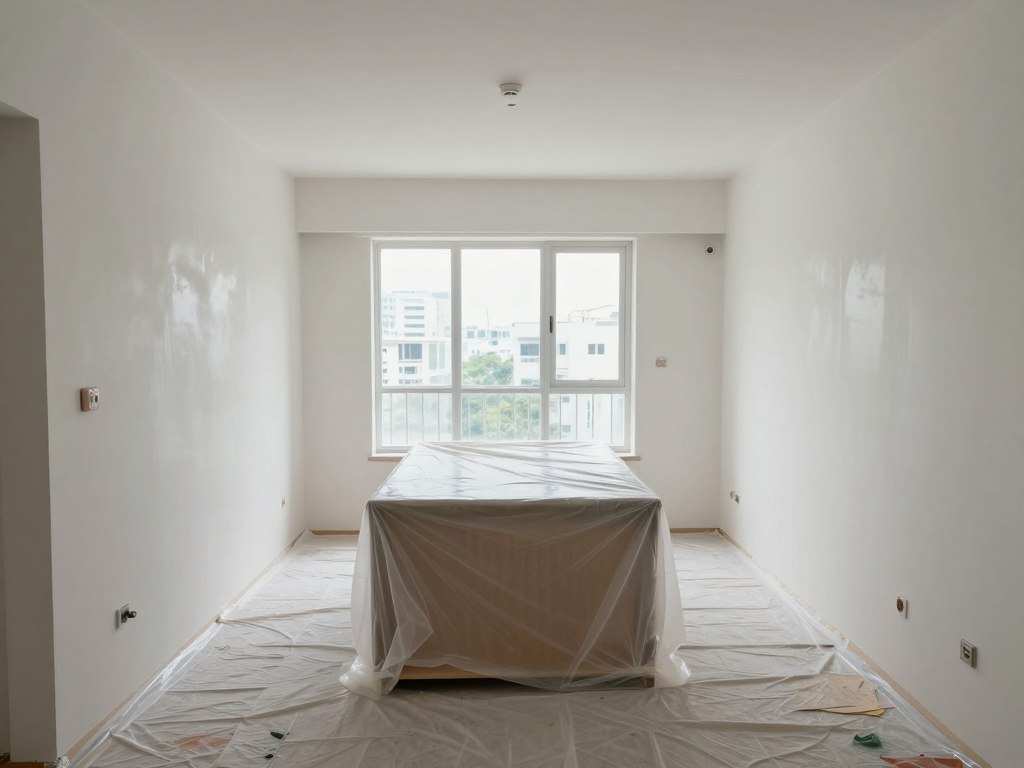
Homeowner preparation completion affects project commencement timing. Contractors should provide clear advance notice specifying required readiness conditions enabling prompt work initiation.
- Room clearing and furniture relocation were completed 24 hours before the start
- Wall decorations, fixtures, and curtains were removed from work areas
- Contractor access arrangements confirmed for the entire project duration
- Pet and child accommodation plans established for work days
- Parking availability confirmed for contractor vehicle and equipment
- Building management approvals obtained for HDB or condo projects
Inspection Methods Ensuring Professional Painting Services Quality
Final results reflect the thoroughness of preparation, application technique, and material quality combinations. Systematic inspection during project execution and upon completion identifies deficiencies requiring correction before final payment.
Professional contractors welcome detailed scrutiny, demonstrating confidence in their workmanship. Defensive responses to inspection requests signal quality concerns contractors hope clients overlook.
Progressive Inspection Checkpoints
Quality verification occurs throughout project stages rather than only upon completion. This approach identifies issues when correction remains straightforward rather than after subsequent work obscures problems.
Final Completion Inspection Protocol
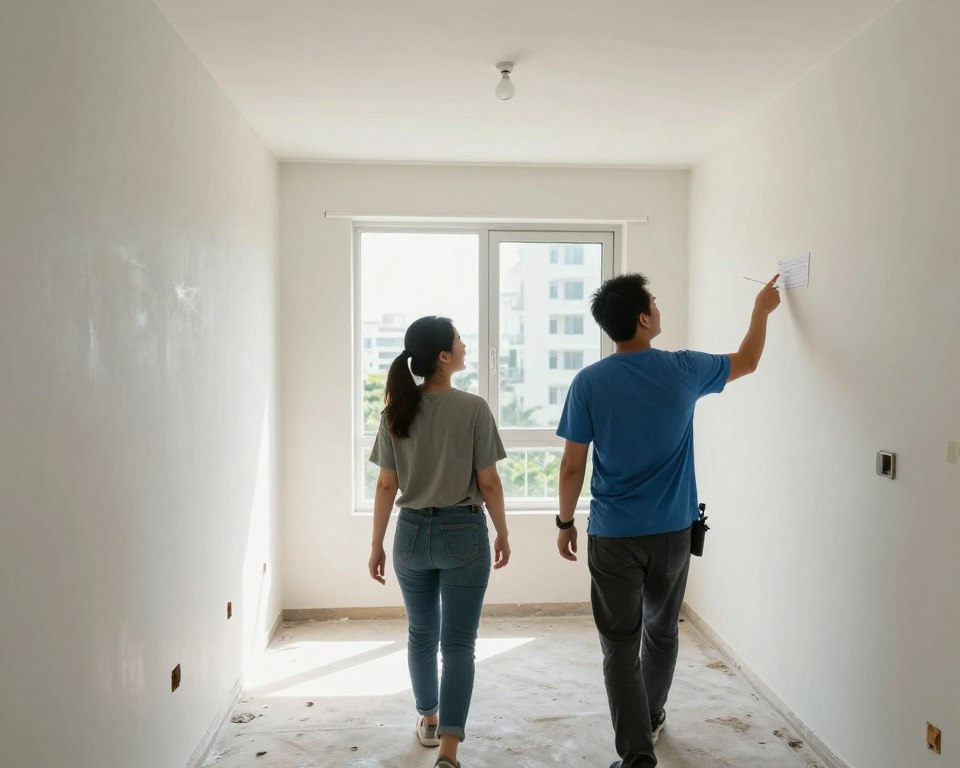
Comprehensive final assessment under optimal lighting conditions reveals deficiencies requiring correction. Natural daylight provides superior defect visibility compared to artificial illumination.
| Inspection Area | Quality Standard | Common Defects | Acceptance Criteria |
| Edge precision | Straight, clean lines without bleeding | Wavy edges, colour overlap onto adjacent surfaces | No visible bleeding when viewed from 1.5 metres |
| Surface texture | Smooth, consistent finish without patterns | Roller marks, brush strokes, texture variations | Uniform appearance under angled lighting |
| Colour consistency | Uniform colour across the entire surface | Patchy areas, streaking, shade variations | Consistent appearance in natural daylight |
| Coverage completeness | No previous colour showing through | Thin spots revealing underlying colour | Complete opacity hides previous coatings |
| Detail cleanliness | Clean fixtures and trim without marks | Dried drips, splatter, messy edges | All non-painted surfaces are completely clean |
Deficiency Documentation and Correction
Identified issues require photographic documentation and written deficiency lists, preventing disputes about correction requirements. Professional contractors address punch-list items promptly before final payment release.
- Schedule final inspection during daylight hours for optimal visibility
- Systematically examine each room rather than random spot checking
- Use the mobile phone flashlight at oblique angles, revealing surface imperfections
- Document all deficiencies with photographs showing specific locations
- Create a written deficiency list with specific correction requirements
- Agree on the correction timeline before contractor demobilization
- Re-inspect corrected areas, verifying satisfactory completion
- Withhold final payment percentage until complete satisfaction
Warranty Coverage Protecting Your Painting Investment
Written warranty provisions demonstrate contractor confidence in material quality and workmanship standards. Coverage terms, duration, and exclusions reveal whether warranties provide genuine protection or marketing placeholders offering minimal recourse.
Comprehensive warranties cover both material performance and application workmanship for reasonable periods. Vague warranty language or verbal assurances lack enforceability when defects appear months after completion.
Standard Warranty Components
Professional painting services provide written warranties specifying coverage scope, duration, and claim procedures. Clear documentation eliminates ambiguity when warranty service becomes necessary.
| Coverage Type | Standard Duration |
| Workmanship defects | 12-24 months typical |
| Peeling or flaking | 12-18 months standard |
| Colour fading | Limited coverage, premium products only |
| Mould growth | Typically excluded unless material defect |
Warranty Exclusions and Limitations
Understanding what warranties don’t cover prevents unrealistic expectations. Certain conditions fall outside reasonable contractor responsibility, requiring homeowner maintenance or environmental management.
- Normal wear from regular use over time
- Damage from improper cleaning methods or harsh chemicals
- Defects caused by building structural issues or water infiltration
- Colour changes from extreme environmental exposure
- Damage from subsequent renovation work by others
- Failures caused by homeowner neglect or deferred maintenance
Communication Standards Indicating Professional Services

Contractor communication quality during initial consultations predicts project experience reliability. Responsiveness, transparency, patience with questions, and clear explanations indicate professionalism extending through completion.
Evasive responses, pressure tactics, or dismissive attitudes toward homeowner concerns signal problematic working relationships. Professional contractors view client education as integral to successful outcomes rather than sales obstacles.
Project Communication Expectations
Ongoing communication throughout project execution keeps homeowners informed about progress, challenges, and schedule adjustments. Proactive updates prevent surprises and demonstrate respect for client investment.
| Communication Type | Timing | Content | Method |
| Pre-start confirmation | 24-48 hours before commencement | Arrival time, crew size, daily schedule | Phone call or message |
| Daily progress updates | End of each workday | Work completed, next day plans, any issues | Brief in-person or message summary |
| Issue notification | Immediately upon discovery | Problem description, impact, proposed solution | Phone discussion with follow-up documentation |
| Schedule adjustments | As soon as the timing changes are identified | Reason for change, revised timeline | Direct communication to agree on a new schedule |
| Completion notice | Upon work finishing | Invitation for final inspection | Phone call scheduling walkthrough |
True Value Analysis for Home Painting Services in Singapore
Lowest initial quotes frequently prove most expensive long-term through premature failure necessitating early repainting. Genuine value assessment considers total ownership costs over realistic performance periods rather than upfront expenditure alone.
Industry performance data demonstrates premium painting work lasting 8-10 years, while economy execution requires repainting every 3-4 years. Over a decade, budget-focused selections cost 40-60% more through multiple repaint cycles plus associated disruption.
Long-Term Cost Comparison
Annual cost calculation reveals superior value in quality-focused investments despite higher initial outlay. This perspective transforms purchasing decisions from price minimization to value optimization.
| Service Level | Initial Investment | Repainting Frequency | 10-Year Total Cost | Annual Cost |
| Economy contractor with basic materials | $1,600 | Every 3 years (3 total projects) | $4,800 | $480/year |
| Standard contractor with mid-range products | $2,500 | Every 6 years (2 total projects) | $5,000 | $500/year |
| Premium contractor with Nippon Paint Vinilex 5000 | $3,300 | Single application lasting a decade | $3,300 | $330/year |
This financial analysis excludes disruption costs, including work absence for contractor access, repeated furniture relocation, family displacement, and project stress. These hidden expenses make frequent repainting substantially more burdensome than financial calculations alone indicate.
Avoiding Common Errors When Selecting Painting Services
Homeowners repeatedly make predictable mistakes during contractor selection, creating problems emerging only after project commencement. Understanding these common errors enables deliberate avoidance through informed decision-making.
Education about typical pitfalls transforms selection from overwhelming confusion into systematic evaluation, identifying genuinely qualified professionals deserving your trust and investment.
Critical Selection Errors
These mistakes account for the majority of homeowner dissatisfaction with painting projects. Recognition enables conscious alternative approaches producing superior outcomes.
Decision-Making Framework
Systematic evaluation using consistent criteria across all contractors enables objective comparison. This structured approach prevents emotional decisions or persuasive sales tactics from overriding rational assessment.
| Evaluation Category | Assessment Criteria | Weighting | Verification Method |
| Credentials and legitimacy | Business registration, insurance, and operating history | High priority – eliminates unqualified contractors | Independent database searches and certificate review |
| Material specifications | Specific brand names, product grades, and climate suitability | High priority – determines longevity | Request product data sheets and application guides |
| Scope comprehensiveness | Detailed preparation, coat quantities, and protection methods | High priority – prevents scope disputes | Line-by-line proposal comparison |
| Reference quality | Recent projects, contactable clients, similar scope | Medium priority – validates claims | Direct telephone reference conversations |
| Price competitiveness | Market alignment for the specified scope | Medium priority – value versus cost | Multiple proposal comparison |
| Communication responsiveness | Prompt replies, clear explanations, professionalism | Medium priority – predicts project experience | Interaction quality assessment |
Frequently Asked Questions

How much do home painting services in Singapore typically cost?
Home painting services in Singapore vary considerably based on project scope, material quality, and property size. A standard 3-room HDB flat ranges from $1,600-$3,500 depending on contractor expertise and product specifications. Economy services using basic materials cost $1,600-$2,200, while premium contractors specifying Nippon Paint Vinilex 5000 charge $2,800-$3,500 for comprehensive execution.
Four-room HDB flats typically range from $2,200 to $4,200, and five-room units $2,800-$5,000. Condo units command 15-25% premiums due to building access restrictions and management requirements. These prices include surface preparation, primer application, two topcoats, and cleanup for interior walls and ceiling. External work, specialty finishes, or extensive repairs incur additional charges.
What should I check before painting the house to ensure quality results?
Verify contractor credentials, insurance, and business registration. Review detailed proposals specifying exact paint brands (not “equivalents”), application layers, and timelines. Contact recent client references directly. Confirm written warranties covering workmanship and materials. Ensure deposits don’t exceed 30% with final payment withheld until completion. Verify comprehensive furniture and fixture protection plans.
How long does professional house painting take in Singapore?
Professional painting services require 5-7 working days for standard 3-room HDB flats when executed properly. This timeline includes thorough surface preparation (2 days), primer application with adequate drying (1 day), first topcoat application (1 day), proper inter-coat curing, second topcoat (1 day), and final inspection with touch-ups (0.5-1 day).
Experience Transparent, Quality Home Painting Services in Singapore with Athena Best Painting
Stop worrying about hidden charges and unreliable contractors. Athena Best Painting delivers complete transparency with detailed proposals, premium materials (Nippon Paint Vinilex 5000), and realistic timelines. We thoroughly document existing conditions photographically, never compromise preparation standards, and provide comprehensive written performance warranties. Expect exceptional professional results, never shortcuts or disappointment.
Explore our services:
- Commercial Painting
- Exterior Painting
- Interior Painting
- Maintenance Painting
- Specialized Finishes
- Wall Plastering
- Contact Us now!
- Phone Number: +65 9247 1009
- Email Address: athenateamcleaning@gmail.com
- Address: 2 Venture Drive, #14-02, Vision Exchange, Singapore 608526