

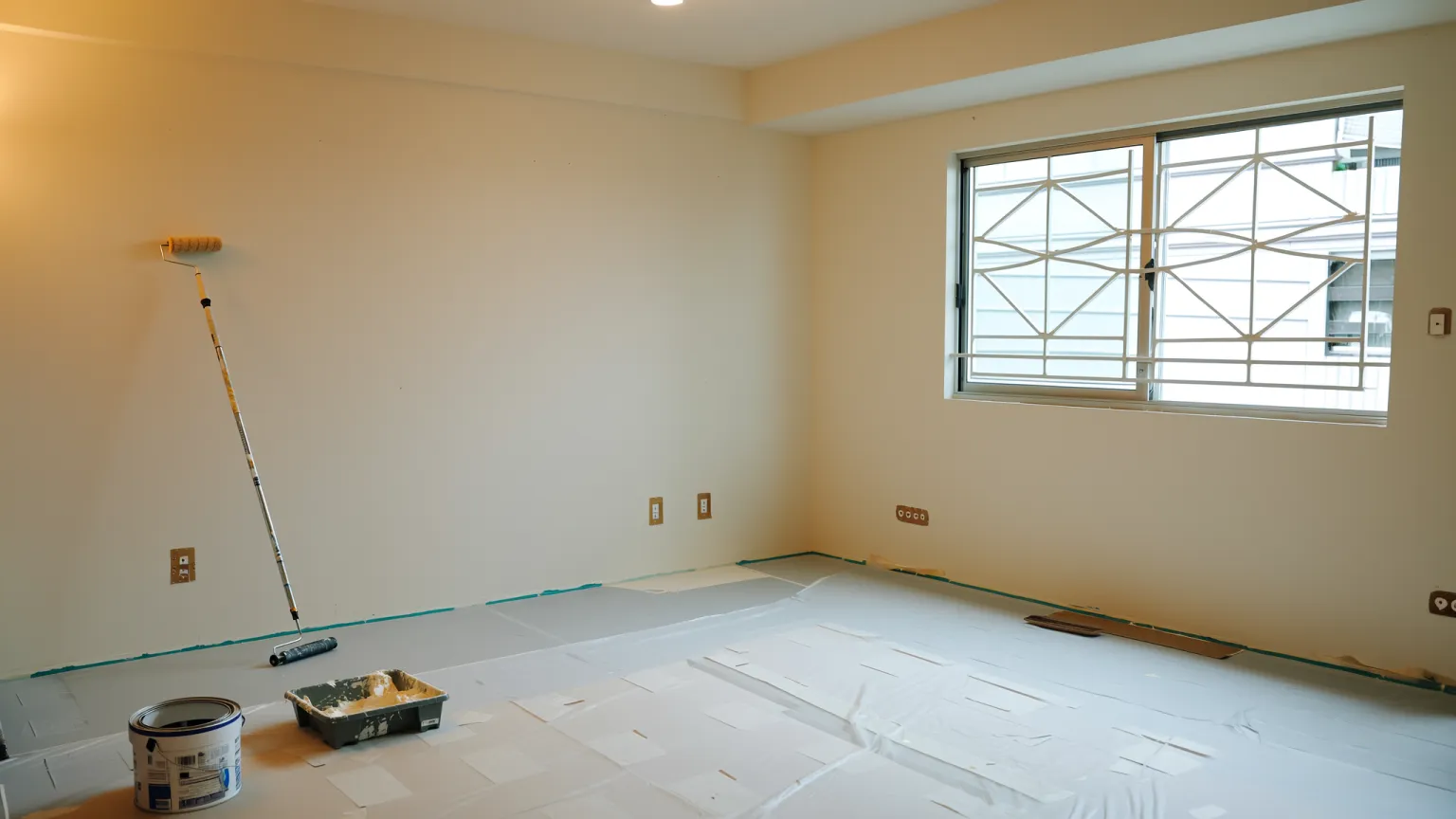
Paint while the flat is empty. That's the whole trick. Empty rooms mean no sofa to shift, no bed to cover, and the painter can see every corner, crack and stain before your furniture hides it. The hard part is the timing: too early and the last trades mark your new walls, too late and you're moving boxes around wet paint.
Here's the order we'd follow for a new BTO, a resale flat or a condo unit, and what to check before you hand over the keys.
Why the empty flat matters
When the rooms are empty, the job is just painting. Nothing to cover, nothing to move, no family working around the crew.
Once the wardrobes and the fridge are in, every room takes longer. Things get moved to one side, covered, moved back. Walls behind built-in carpentry can't be reached at all. And you're the one living with the smell and the drop sheets.
There's a second reason. An empty flat shows you what's wrong with it. Hairline cracks, old nail holes, a water stain near the aircon, patchy touch-ups from the last owner. You'll spot them now. In six months they'll be behind a bookshelf.
When to book the painter
Book the painter for after the dusty, wet and heavy work, and before the furniture.
The usual order looks like this:
- Hacking, wet works and tiling.
- Plastering and any spalling repair.
- Electrical trunking and false ceiling.
- Built-in carpentry, fitted where it goes.
- Painting.
- A short touch-up visit after the last fittings.
- Curtains, furniture, move-in.
Carpentry is the one to talk through. Sometimes we paint the wall first and the cabinet goes against it. Sometimes the cabinet goes in first and we cut in around it. Ask your renovation contractor which way they're doing it, and tell us. It changes what gets painted and when.
Keep the touch-up visit in the plan. Someone will scrape a wall carrying in a fridge. Better that happens before your final coat check than after.
New plaster needs time first
If walls were plastered or patched during the renovation, the paint can't go on the next morning.
Nippon Paint says its Expresskote Sealer, made for new and old cement-rendered walls, can go on after 3 days of plastering. It also says the wall must have no water residue and moisture under 4% before it goes on.
So if your renovation contractor finishes plastering on a Monday, don't book the paint for Tuesday. Ask us to check the wall first. Paint over a wet wall and it can bubble or flake later.
A new BTO: check defects before you paint
For a new HDB flat, there's a 1-year Defects Liability Period from key collection. Within that year you can submit a rectification request to HDB online or at the Building Service Centre in your precinct.
So walk the flat before the painter comes. Look for cracks, uneven walls, stains and anything that doesn't close right. Note them and photograph them. Raise them with HDB first. Once you've painted over a crack, it's harder to show what was there.
A resale flat: look under the old paint
A resale flat comes with someone else's paint. That means grease near the kitchen, smoke stains, adhesive marks where posters were, and the odd patch painted in a slightly different white.
Paint over those as-is and some of them come back through the new coat. The stains need treating and sealing first. Our guide to primer and sealer before painting explains when a wall needs one.
Older flats need one more look: the ceilings. HDB says flat owners are responsible for preventing and repairing spalling concrete in their flats, and that repainting ceilings helps prevent carbonation. If you see bulging, cracked or rust-stained ceiling patches, get them fixed before paint. Our spalling concrete repair page shows what the repair involves.
If the flat was built up to 1997, check whether your precinct is in HDB's Home Improvement Programme before you pay for spalling repair yourself. HDB pays the Essential items, which include spalling repair, in full for Singapore Citizen households, once the precinct is selected and votes for it.
A condo unit: sort the management office first
Condo jobs stall on paperwork more than paint. Most management offices want a renovation permit and a deposit before any contractor starts, plus rules on work hours, lift booking and protecting the common corridor.
We handle the MCST permits, deposits and paperwork on condo jobs, so you don't have to chase forms during your move. Ask for that in writing from whoever you hire. Our condo painting page covers the rest.
Pick paint by room, not by colour chart
Choose the colour after you know what the room is for.
| Room | What it has to deal with | What to ask for |
| Living room and bedrooms | hands, chairs, the odd knock | a finish you can wipe |
| Kitchen | grease and steam | a paint that takes frequent cleaning |
| Bathroom and around the aircon | damp and mould | an anti-mould paint, on a dry wall |
| Ceilings in an older flat | carbonation, spalling | repair first, then repaint |
Nippon Paint makes an Odour-less Anti-Mould Ceiling White for damp spots like kitchens, bathrooms and the area around an air-conditioner. Our anti-mould paint guide compares the options.
Settle the colours before the crew arrives. A change halfway through holds the job up. Look at samples on your own walls, under your own lights, at night as well as in the day. Warm and cool LED bulbs make the same shade look like two different colours.
Ask the painter to write down the paint
This one saves you a headache a year later. When you need a touch-up, nobody remembers which white went on the wall. Close is not close enough. You'll see the patch.
We record the paint brand, product, colour code and batch for every address we paint. Whoever you use, ask for the same list and keep it with your flat documents.
Who you can hire for an HDB flat
HDB's rules say you may only engage contractors from its Directory of Renovation Contractors to carry out renovations in your flat. HDB runs an e-Service where you can look a contractor up. Check it before you sign anyone.
Leave a gap before move-in day
Paint dries to the touch in hours, but walls marked on day one are a pain to fix. Don't book the movers for the afternoon the painters leave.
Leave a little buffer. Walk the flat in daylight with the windows open. Look at the walls from an angle, check corners, ceiling lines, door frames and the patches that were repaired. Point at anything you don't like. It's much easier to fix before the sofa arrives.
Sources
- HDB, Rectification of Defects in New Flats, read 10 Nov 2026
- HDB, Important Information on Renovations, read 10 Nov 2026
- HDB, Spalling Concrete, read 4 Nov 2026
- HDB, Background of HIP, Annex B, read 4 Nov 2026
- Nippon Paint, Expresskote Sealer, read 10 Nov 2026
- Nippon Paint, Odour-less Anti-Mould Ceiling White, read 4 Nov 2026