

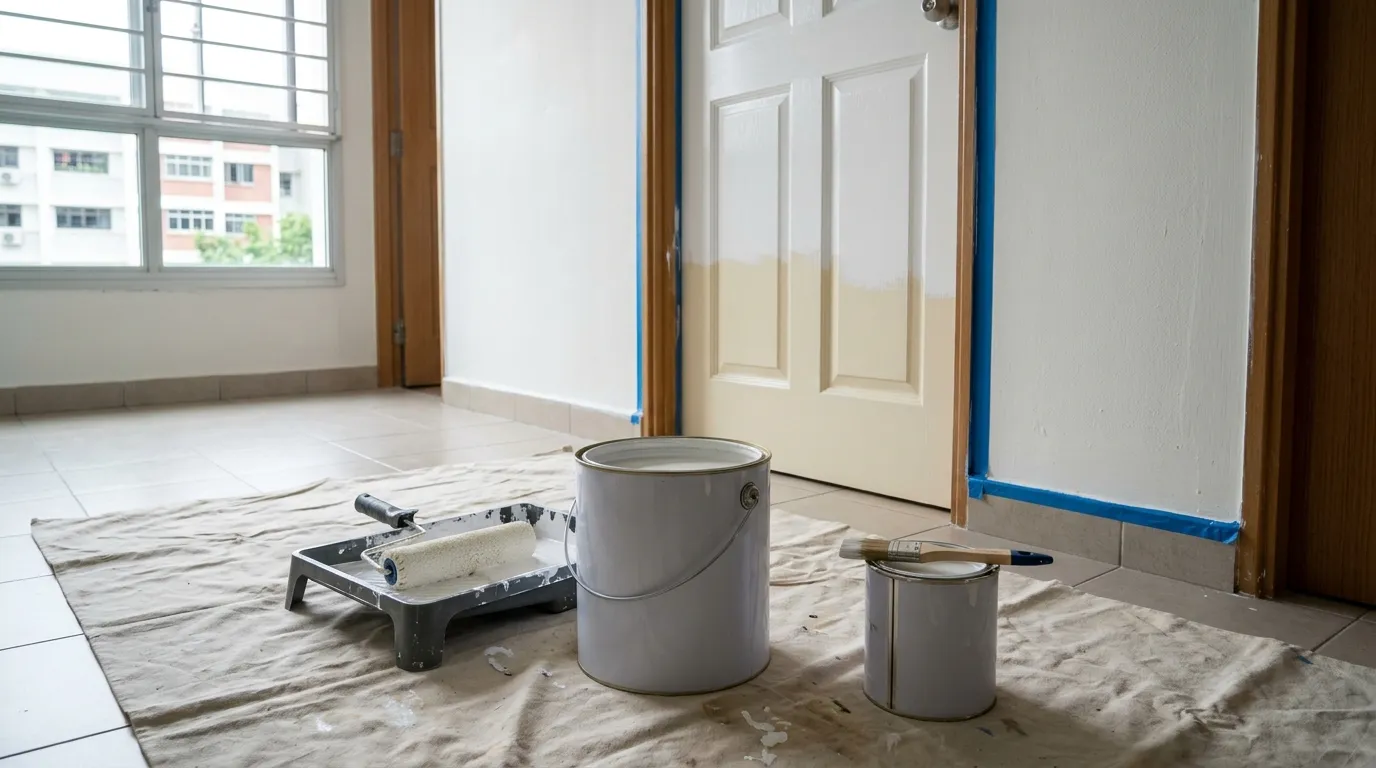
For the walls and ceilings of an HDB flat or a condo, use water-based acrylic. That's what almost every wall paint on the shelf already is. Nippon Paint says its interior wall paints are water-based and shouldn't be thinned with water at all.
Oil-based paint, the solvent kind, still has a job. It's a small one now. You'll meet it as a sealer on old chalky walls, a primer on bare metal, and sometimes a hard gloss on a gate or a door. Even there, water-based enamels do most of what the oil ones used to.
So the real question isn't which paint is better. It's which surface you're painting.
What actually changes between the two
Both kinds have a binder and a pigment. The difference is what carries them onto the wall.
- Acrylic. Water carries it. Brushes rinse in water, the smell is mild and it dries fast.
- Oil-based. A solvent carries it. You clean up with thinner, the smell hangs around longer, and the film dries harder and slower.
Drying time is where you feel it. Nippon's own product sheets show the gap:
- Wall paints such as Vinilex 5000 and EasyWash go on in two coats, 2 to 4 hours apart.
- Aqua Bodelac, a water-based enamel for wood and metal, can take its next coat after 3 hours.
- Vinilex 5170 Wall Sealer, which is solvent-based, needs 5 hours before the next coat.
- Bodelac 9000 enamel is touch dry in 2 hours, but you wait 18 hours before the next coat. Its undercoat needs 18 hours too.
On a door that's the difference between finishing in an afternoon and coming back tomorrow.
Walls and ceilings: water-based, nearly always
Interior walls are where acrylic does its best work. It's quick to recoat, so a room can get both coats in a day. You can sleep in the room sooner. And it rinses off the floor if a drop lands.
Wet rooms are the exception that still isn't oil. A bathroom or kitchen wall wants an anti-mould water-based paint, not a solvent one. We cover which one suits each room in anti-mould paint for Singapore walls.
If you're painting a whole flat, the paint types guide goes room by room.
Old, chalky or stained walls: this is where oil still shows up
Rub your palm on an old wall. If it comes away white and powdery, the top coat has gone chalky. New paint won't grip that on its own.
A sealer fixes it first. Nippon's Vinilex 5170 Wall Sealer is solvent-based and stops salts from coming through and staining the new coat. Dulux sells a solvent-based sealer that binds a chalky paint film and firms it up. There are water-based sealers too, like Dulux Sealer (Water-based) for plaster, cement and textured walls.
Which one we use depends on the wall. A chalky resale flat often gets the solvent one. A fresh plaster patch gets a water-based sealer once it's dry. Our page on whether you need sealer paint walks through how to tell.
Gates, grilles and railings: the primer matters more than the top coat
Metal is the one place we still reach for solvent paint most often, and it's mostly about the coat underneath.
Nippon says exposed metal has to be primed straight away, or it starts to rust. Dulux Primer is a solvent-based anti-corrosion primer made for iron and mild steel, new or weathered.
The top coat can then be either kind. Bodelac 9000 is an enamel made to protect metal from rust and wood from weather. Aqua Bodelac does the same job on wood and metal as a water-based enamel, with low odour.
What decides how long a gate lasts:
- Every bit of loose rust and flaking paint comes off first.
- Bare spots get primer the same day.
- Two thin top coats go on, with the full wait between them.
Skip step 2 and the colour of the top coat won't save it.
Doors, frames and skirting: water-based enamel has caught up
Timber doors and frames get knocked, wiped and leaned on. They need a harder finish than a wall, which used to mean oil-based enamel.
Now you have a choice. Nippon lists Aqua Bodelac as non-yellowing, washable and very low odour. That makes it the easy pick for a white bedroom door you'll be sleeping beside the same night.
A solvent enamel still flows out smoother on a detailed panel door, because it stays wet longer and the brush marks settle. The trade is the smell and the 18-hour wait.
If the wood is going to be stained or varnished rather than painted, that's a different decision. See varnish vs paint for wood.
Can you paint water-based over oil-based?
Yes, but not straight on. Acrylic slides off a glossy oil film if you just roll over it.
Here's the order:
- Clean off grease and dirt.
- Sand the gloss down so the new coat has something to grip. Nippon says the same of its Aqua Primer Sealer Undercoat: sand high-gloss and semi-gloss surfaces first.
- Prime. A multi-surface or bonding primer goes over the old gloss.
- Then your water-based top coats.
Going the other way, oil over acrylic, also needs a sand and a primer. Our primer guide covers which primer suits which surface.
How to know what's on your walls now
The easiest way is to check what went on last time. Most homes can't, because nobody wrote it down.
That's why we record the paint brand, product, colour code and batch for every address we paint. When you call us for a touch-up two years later, we already know what's on the wall and whether the new coat will sit on it properly.
If there's no record, assume a glossy door or gate is oil-based and prep it that way. It costs a little sanding. Guessing wrong costs a coat that peels.
Living in the flat while it's painted
If you're staying in during the job, the paint choice changes your week.
- Water-based walls: open the windows, and the room is usually usable the same evening.
- A solvent sealer or enamel: keep the room aired and empty until the smell clears, and keep kids and pets out.
- Plan solvent work, like a chalky wall or the main gate, for when you're out, and do the bedrooms in water-based.
What this means for your quote
You don't need to pick the paint yourself. Tell us the property, which rooms, and what the walls look like now. A photo of anything chalky, stained, rusty or glossy helps most.
We'll say which surfaces need a sealer or primer, which need enamel, and what goes on everywhere else. You'll know why before anyone opens a tin. Our HDB painting service page shows what a full flat job covers.
Sources
- Nippon Paint, Can I Dilute the Paint Before Painting, read 4 November 2026
- Nippon Paint, painting a room guide, read 4 November 2026
- Nippon Paint, Aqua Bodelac, read 24 November 2026
- Nippon Paint, Bodelac 9000, read 24 November 2026
- Nippon Paint, Bodelac 9000 Undercoat, read 24 November 2026
- Nippon Paint, Vinilex 5170 Wall Sealer, read 4 November 2026
- Nippon Paint, Aqua Primer Sealer Undercoat, read 4 November 2026
- Dulux Singapore, products, read 24 November 2026
- Dulux Singapore, Dulux Primer, read 4 November 2026
- Dulux Singapore, Dulux Sealer (Water-based), read 4 November 2026